If you were to ask me, “What was your first job?” I’d probably hesitate. Not because I don’t know, but because that question alone doesn’t capture the journey. Had you asked instead, “How did you first earn money?”- ah, then the story would go back much farther.
Long before I held any official title or drew a salary, I had already stepped into the world of earning; indirectly, informally, and creatively. I must have been in Year 9 when I self-published a book. I don’t recall the exact amount I earned out of that book; memory doesn’t serve that part. Probably because I spent most of it in the very bookstore that sold the majority of my copies, trading my words for new books, in what felt more like an exchange than a transaction. But that was the first taste. After that, I started making pocket money through various means; facilitating training, taking on freelance projects, and occasionally trying out the stock market.
But the true restart happened in Australia.
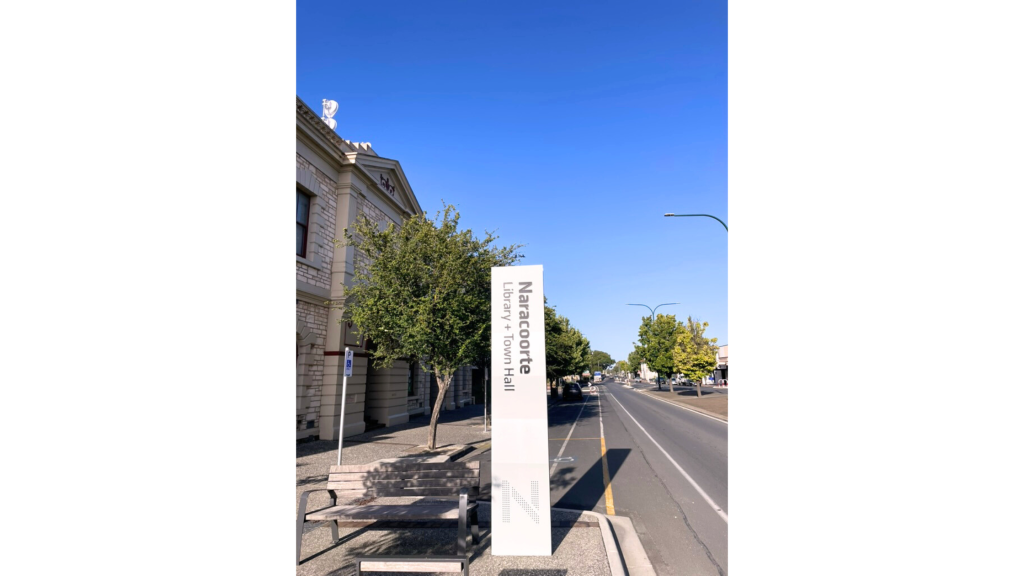
Arriving here was more than just migration, it was a reset button on every aspect of life. I remember those initial months as a blur of learning, adapting and surviving. There was no roadmap, no manual, just resilience and a lot of hope. And then came an offer, from the Government of South Australia, SA Health, to work with the Limestone Coast Local Health Network in Naracoorte. A permanent position.
It felt surreal. Not because it was a dream job or anything, but because of what it represented: a foothold. The job that was offered to me was beyond what I had expected for that point in time. Nor I lacked the experience. Not because I wasn’t confident. But because by then in just four months, I had come to understand what being an international student in a first world country really meant. I had already felt the weight of visa limitations, work-hour restrictions, and all the quiet filters that shape how employers perceive you. It all makes a lot more sense now than it did then.
I had managed to crack a few interviews, but I hadn’t quite crossed the final bar. Then suddenly, as if out of nowhere, this offer came. Yes, I was overjoyed. I felt it in my bones: I knew it. I deserved it. But saying “yes” to that job wasn’t simple.
It meant packing up again just when I was beginning to feel the edges of something familiar. It meant leaving behind the little routines I had started to form, the streets I had only begun to know, and heading to a remote town called Naracoorte, barely four months into life in Australia. What made it even more surreal was this: I had never driven a car on a public road before. And yet, there was no other way to get there. No direct bus. No train. No flight. Had I not owned a car or had I not gathered enough courage to drive, there would’ve been no other way. Can you imagine? This isn’t some rural village in Nepal; this is Australia. Yes, I had a Nepali license that legally permitted me to drive here. But let’s be honest, I had zero real road experience. And now, I was about to drive over 338 kilometres, alone, from Adelaide to Naracoorte. Just me, the road, and a car I was still learning to trust.
And just when that one offer landed in my inbox, the universe, in all its irony, sent another. A decent admin job in the city in a fancy building that would give you a good feeling just walking in and another opportunity I was close to cracking. Suddenly, I had choices. For someone who had been waiting patiently, sometimes hopelessly, for even one chance, having two on the table within 48 hours felt surreal.
The first thing I did? I said “no” to the city job. After I did that, I realized, I didn’t consciously or unconsciously take the easy one. I decided to wait for the government job application to progress. But the next day, I got a congratulatory email from the manager of the Local Health Network in Naracoorte. And deep down, I was already leaning toward the government job. Of course, when you’ve had no job for months, it’s hard to say “no.” But this one, this one was harder to say “yes” to.
I reached out to my family, to a tight circle of friends, to a few members of the Nepali community I had gotten to know. The responses were mixed. But the Nepali folks were almost unanimous “Don’t do it.” Not because it wasn’t a good opportunity, but because they knew what it meant to relocate alone. To drive that far, with barely a week’s experience behind the wheel. They weren’t wrong.
But the decision had to be made. And I said yes.
Even then, it wasn’t immediate. It took over a month to complete all the pre-employment formalities. I had to prove my DPT and BCG vaccinations, both of which I had taken back in Nepal, but of course, there was no certificate to prove it. So I went through antigen testing, doctor appointments, wait lists, sample collection, and reports. Then came the paperwork; police clearances, name verifications, tax documents, declaration forms, and identity checks. It felt never-ending.
But I’ll tell you this, what I was most excited about wasn’t the job title itself. It was the thought of having an official government email address: myname@sa.gov.au. That meant something to me. I had been desperate, yes, desperate to work with the Government of South Australia. That little suffix on an email address felt like a validation.
Government jobs in Australia operate very differently than those in Nepal. Here, there are layers; contractual, part-time, casual, even contractor-based roles, making government positions more accessible and dynamic. In Nepal, landing a government job is like catching a lifetime train you get on, and that’s your track forever. But here, it felt more open, more collaborative. And I wanted to understand that system from the inside.
They offered me a respite accommodation in the hospital for the three-month contract period, after which I’d need to find my own place and I took it, gratefully. It wasn’t a big deal to most. But for me, it brought the kind of relief that can’t be measured in square meters or room size. It felt like a step not a leap, but a real step, from zero toward one.
Then came the day I had to leave the city I had only just begun to know. I did a bit of last-minute shopping and packing, but this time, it felt different. I wasn’t lugging a suitcase through terminals or climbing onto a bus with a backpack digging into my shoulders all my life. My bags would come with me, quietly occupying the back seat of my car. A couple of travel bags, a small snack box for the road, and my laptop bag which, of course, would claim the front passenger seat.
As I loaded the car, I couldn’t help but think of how far I’d come, not just in distance, but in courage. Just weeks ago, I had nervously taken the wheel for the first time. And now, I was about to leave the city behind in that same car, the same trusted companion that had carried me through fear, doubt, and rain-soaked highways. The Ford was never just a car. It had become proof that I could show up for myself, even when I didn’t feel ready. The first car I ever drove in my life was a 2009 Ford Focus. I didn’t buy it because I was confident. I bought it because I needed to. Despite booking lessons and waiting for weeks, I never managed to get even a single session with a driving instructor. So, I taught myself, slowly, nervously, persistently. The first time I ever drove that car beyond my neighbourhood, beyond the familiar turns of my suburb was to Monarto. 81 kilometres, one way. I had been thinking about it for days. Imagining every stretch, every turn, every possible thing that could go wrong. It was a late morning, cloudy, gloomy and even before I hit the main road, it started raining heavily. I had never driven in the rain before. Not even once. I struggled just to figure out the windshield wipers. My hands gripped the wheel too tightly, trying to balance speed while staying focused on the blurry road ahead. My heart was pounding. I still don’t know how I made it through that stretch of heavy rain, heavier traffic. It felt like the odds couldn’t stack any higher. It took me ages to reach the M2 highway. And then I had to push, really push, the accelerator to catch the highway speed: 110 km/h. I stayed tucked in the left lane, of course. But even then, the big trucks zooming past would shake the car and rattle my already-shaky nerves. Everyone talks about how scenic that drive is. But to me, it was just one endless road I couldn’t dare to blink away from. When I finally reached Monarto, the rain had stopped. The air was chilly, but the sky had cleared. I stepped out, looked around, and felt it in my chest: I made it. I had done something I didn’t think I could. A couple of hours later, I drove back home to Ascot Park. It was better. Much better. The fear had loosened its grip. I could actually take in the scenic drive a little this time. I had crossed a line, not just on a map, but within myself. That was an hour drive to and an hour back.
But travelling to Naracoorte, it was different. I wasn’t just driving to test my courage, I was driving 338 kilometers, alone, to a town I’d never been to, with no one waiting on the other side. My only companion would be a playlist of old Nepali classics and my own racing thoughts. I wasn’t ready. Not really. But I had already said yes. I had chosen this path. And now, there was no looking back. I woke up early that morning. Made a warm meal, packed a few snacks for the road, and sat for a moment in the quiet, trying to steady myself. The sky outside was dull, a little grey, nothing like the storm brewing inside me. I was excited, sure, but more than that, I was unsure. I was leaving for a new place in a new country, where I knew no one. The thrill of joining a government role, something I had dreamed of, was weighed down by all the unknowns. But somewhere inside, I was preparing myself to rise to it. To stand steady, like a shoulder ready for weight. Like a Gorkha, maybe, though that felt too bold to claim. Still, I tried to carry that spirit, even if my hands were trembling.